
Do wisdom teeth cause teeth to shift?
“Can wisdom teeth cause teeth to shift?” is a very common question, especially among people who begin to notice that their lower front teeth are becoming crowded, rotated, or no longer as straight as before. Many people believe that when wisdom teeth erupt, they “push” the entire dental arch forward, causing the front teeth to become crowded. As a result, many assume that simply removing wisdom teeth early can prevent teeth from shifting.
However, according to orthodontic research, this issue is not that simple. Wisdom teeth are not considered the only cause or the main cause of front tooth crowding. Tooth alignment is influenced by many factors, including the teeth, jawbone, bite, soft tissues, periodontal condition, and natural changes that occur with age.
In other words, to accurately answer whether wisdom teeth can cause teeth to shift, we need to look at the entire muscle–bone–tooth system comprehensively, instead of focusing only on a single third molar.

Why Do Many People Wonder Whether Wisdom Teeth Can Cause Teeth to Shift?
Do Wisdom Teeth Cause Teeth to Shift? What Does Research Say?
For more than a century, researchers have studied the relationship between wisdom teeth and crowding of the lower front teeth. In the past, many dentists believed that wisdom teeth were a cause of front tooth shifting because, when they erupted, they could create forward pressure on the dental arch.
In 1971, nearly 65% of surveyed dentists believed that wisdom teeth were the cause of front tooth crowding. From this viewpoint, early wisdom tooth extraction was once considered a way to help prevent the front teeth from shifting.
However, as orthodontic research developed further, scientists found that the relationship between wisdom teeth and front tooth crowding is not absolutely clear. Therefore, the question “Do wisdom teeth cause teeth to shift?” should be understood carefully. Wisdom teeth may be a related factor in some cases, but they cannot be considered the only cause of tooth misalignment.
When patients ask, “Do wisdom teeth cause teeth to shift?”, the answer is not simply yes or no. Tooth shifting is often influenced by many factors, including dental arch length, tooth size, jawbone development, bite relationship, periodontal health, and muscle balance. This means that wisdom teeth should be evaluated as part of a complete orthodontic diagnosis, not as the only explanation for crowded front teeth.
What Does Research Say About Wisdom Teeth and Front Tooth Crowding?
The systematic review “Do wisdom teeth induce lower anterior teeth crowding?” by Rūta Stanaitytė, Giedrė Trakinienė, and Albinas Gervickas, published in Stomatologija, Baltic Dental and Maxillofacial Journal in 2014, evaluated multiple factors that influence lower front tooth crowding.
The study examined wisdom teeth, eruption sequence, the position of opposing molars, periodontal condition, tooth size, age, gender, jawbone development, premature loss of molars, malocclusion, and total dental arch length.
The important conclusion is that wisdom teeth should not be considered the only cause of front tooth crowding. Therefore, when asking “Do wisdom teeth cause teeth to shift?”, the more appropriate answer is that multiple contributing factors need to be evaluated, including the teeth, bone, periodontal tissues, bite, and soft tissues.
This also means that wisdom tooth extraction does not always help prevent the front teeth from becoming misaligned. If tooth crowding is caused by a lack of space in the dental arch, malocclusion, premature tooth loss, or imbalance of the lips, cheeks, and tongue muscles, simply removing wisdom teeth may not solve the main cause.
So, do wisdom teeth cause teeth to shift in every patient? Not necessarily. In some cases, wisdom teeth may be associated with pressure or discomfort, but lower front tooth crowding often develops due to long-term biological and orthodontic changes rather than wisdom teeth alone.
The Muscle–Bone–Tooth System Changes Over Time
Our body does not remain unchanged. The muscle, bone, and tooth system continuously adapts to the environment, chewing habits, body development, and the natural aging process.
Significant changes often begin during the transition from baby teeth to permanent teeth, also known as the mixed dentition stage. This is when baby teeth are gradually replaced by permanent teeth, the dental arches continue to develop, and the bite begins to form more clearly.
Puberty is also an important stage because the jawbones are still growing. If the upper and lower jaws do not develop harmoniously, the dental arch may lack space, teeth may erupt crowded, or the bite may become misaligned.
Therefore, lower front tooth shifting does not necessarily come only from wisdom teeth. In many cases, it is the result of a long process of changes over many years. This is why the question “Do wisdom teeth cause teeth to shift?” cannot be answered simply by looking at whether the patient has wisdom teeth or not.
When evaluating “Do wisdom teeth cause teeth to shift?”, dentists and orthodontists need to look at the whole system: the jaws, teeth, periodontal tissues, muscles, and bite. A full examination helps determine whether wisdom teeth are truly affecting tooth position or whether other factors are more important.
Factors That Truly Affect Tooth Alignment
-
Abnormal Tooth Size
One important factor that causes dental crowding is a mismatch between tooth size and dental arch size. If the teeth are large while the dental arch is narrow or short, there may not be enough space for the teeth to erupt in proper alignment.
In this situation, the teeth may rotate, tilt, erupt in the wrong position, or overlap. This is why some people still develop front tooth crowding even if they do not have wisdom teeth or have already had them removed. Therefore, the question “Do wisdom teeth cause teeth to shift?” should be evaluated together with tooth size and dental arch length.
If the teeth are naturally large compared with the jaw, crowding may still occur regardless of wisdom teeth. In this case, asking only “Do wisdom teeth cause teeth to shift?” may lead to an incomplete understanding of the real cause.
-
Disharmony Between Tooth Size and Dental Arch Length
The dental arch is like a “track” that allows the teeth to align. If the arch length is insufficient compared with the total size of the teeth, crowding will occur.
This condition can appear early, especially during the mixed dentition stage. When permanent teeth erupt but the jaw does not develop enough width or space, the teeth have to compete for position on the dental arch.
Therefore, when evaluating “Do wisdom teeth cause teeth to shift?”, orthodontists do not only look at the third molars. They also assess the entire dental arch length and the degree of space deficiency.
If the dental arch has been narrow since childhood, front tooth crowding may happen even before wisdom teeth fully erupt. This is another reason why the answer to “Do wisdom teeth cause teeth to shift?” depends on each patient’s dental structure.
-
Premature Loss of Permanent Teeth or Molars
Premature tooth loss can cause adjacent teeth to move into the empty space. When tooth position changes, the bite and alignment of the dental arch are also affected.
In particular, early loss of molars can change the posterior bite support. This may indirectly affect the stability of the front teeth, making the incisors more likely to shift over time.
In this case, if we only ask “Do wisdom teeth cause teeth to shift?” while ignoring the history of tooth loss, the real cause may not be fully evaluated. Tooth loss, drifting of adjacent teeth, and changes in bite support can all contribute to shifting.
For some patients, wisdom teeth are not the main reason for dental movement. Instead, missing teeth or unstable bite support may explain why the teeth gradually change position.
-
Periodontal Condition
The periodontium is the supporting system of the teeth, including the gums, periodontal ligaments, and alveolar bone. When periodontal support is weakened, teeth may become loose, move, or change position.
Bone loss caused by periodontal disease, poor oral hygiene, or age-related changes can all make the teeth less stable than before. This is an important cause of tooth shifting in adults.
In many cases, patients think their teeth have shifted because of wisdom teeth, but the real cause may be related to periodontal health. Therefore, the question “Do wisdom teeth cause teeth to shift?” should be considered together with periodontal condition.
If the gums and supporting bone are weak, even normal chewing forces may cause gradual tooth movement. This means that the answer to “Do wisdom teeth cause teeth to shift?” must include an evaluation of gum health and bone support.
-
Jawbone Development
The jawbone provides the foundation that determines tooth position. If the lower jaw is restricted by the upper jaw, or if the two jaws do not develop in balance, the lower front teeth may be pushed inward and become crowded due to lack of space.
In children, this is why monitoring jaw growth is very important. If a narrow arch, jaw deviation, or malocclusion is detected early, the dentist can create an appropriate intervention plan during the growth period.
When jaw development is not harmonious, the question “Do wisdom teeth cause teeth to shift?” is only one small part of the overall diagnostic process. Jaw size, arch width, and facial growth pattern may have a stronger influence on tooth alignment than wisdom teeth alone.
For patients with a naturally small jaw or narrow dental arch, teeth may shift or crowd because there is not enough space. In these cases, asking “Do wisdom teeth cause teeth to shift?” should be followed by a complete jaw and bite assessment.
-
Malocclusion
The bite affects not only chewing but also tooth stability. When the upper and lower teeth do not contact in the correct position, chewing forces may be distributed unevenly.
Over time, these abnormal forces can cause teeth to wear down, tilt, extrude, rotate, or become crowded. Correct molar position is one factor that helps maintain front tooth stability.
Therefore, if we only look at whether the teeth are straight and ignore the bite, it is easy to misjudge the cause of tooth shifting. This is also why the question “Do wisdom teeth cause teeth to shift?” should be answered only after the bite has been examined.
In some patients, bite problems may be the main reason the teeth move over time. Wisdom teeth may be present, but they are not always the direct cause. A proper diagnosis helps determine whether tooth shifting comes from wisdom teeth, malocclusion, or other orthodontic factors.
-
Imbalance of the Lips, Cheeks, and Tongue Muscles
Teeth are affected not only by the bone and bite but also by the surrounding soft tissues. The lips, cheeks, and tongue form a balanced system that helps keep teeth in a stable position.
If the tongue pushes in the wrong direction, the lips are too tight, mouth breathing continues for a long time, or the cheek muscles create abnormal pressure, the teeth may gradually change position over time.
This factor is often overlooked when many people assume that wisdom teeth are responsible for lower front tooth shifting. In reality, the answer to “Do wisdom teeth cause teeth to shift?” also depends on the balance of the entire lips–cheeks–tongue muscle system.
If muscle pressure is abnormal, teeth may move even when wisdom teeth are absent. Therefore, dentists need to evaluate oral habits, tongue posture, lip pressure, and breathing patterns before concluding that wisdom teeth are the cause.
Should Wisdom Teeth Be Removed to Prevent Teeth from Shifting?
You should not decide to remove wisdom teeth only because you are worried that the front teeth may shift. Wisdom tooth extraction should be based on a clinical examination, X-rays, and the dentist’s evaluation.
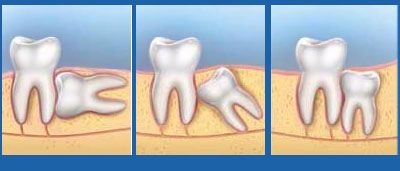
Wisdom teeth may need to be removed in cases where they erupt in the wrong direction, are impacted, cause pain, lead to pericoronitis, develop decay, affect the second molars, or create a risk of pathology. However, removing wisdom teeth solely to “prevent front tooth crowding” is not always a mandatory indication..
So, do wisdom teeth cause teeth to shift? In some cases, wisdom teeth may contribute to pressure or be associated with dental changes, but they are not the only cause of shifting teeth. Tooth movement is usually the result of multiple factors working together over time.
Before deciding on extraction, patients should understand the answer to “Do wisdom teeth cause teeth to shift?” in their own specific condition. A personalized dental examination is necessary to determine whether wisdom teeth should be monitored, treated, or removed.
In conclusion, the question “Do wisdom teeth cause teeth to shift?” should be answered with a complete clinical perspective. Wisdom teeth may be one factor, but tooth shifting can also be caused by dental arch deficiency, abnormal tooth size, jawbone development, periodontal condition, malocclusion, tooth loss, and soft tissue imbalance. A proper diagnosis helps patients choose the right treatment instead of assuming that wisdom teeth are always the main cause.
What Is Twin Block in the Treatment of Protrusion Caused by Jaw Development Problems?
Twin Block is one of the well-known functional orthodontic appliances used to treat Class II malocclusion caused by an underdeveloped or retruded lower jaw. In orthodontic growth modification, Twin Block is commonly used for children who still have growth potential, especially when the lower jaw does not develop forward properly.
Twin Block treatment is often indicated for children with jaw-related protrusion, not simply tooth protrusion. This condition may present with signs such as:
Protrusive upper front teeth, creating a “buck teeth” appearance.
A short chin.
The lower lip positioned behind the upper lip.
An unbalanced facial profile.
A smile that shows mostly the upper teeth.
Many parents think their child only has “protruding teeth,” but in reality, the cause often lies in the jaw relationship, especially the suboptimal development of the lower jaw. In these cases, Twin Block can play an important role because Twin Block does not only focus on straightening teeth. The main purpose of Twin Block is to support better lower jaw positioning and guide jaw development during the child’s growth period.
Some parents may also wonder, “Do wisdom teeth cause teeth to shift?” However, in children who are still in the growth stage, protrusion is usually not related to wisdom teeth. Instead, the problem is often associated with jaw development, tooth position, and bite relationship. This is why an orthodontic assessment is important to determine whether the child needs growth modification with Twin Block or another type of treatment.
If treatment is delayed until the child is older and braces are started later, we may only be aligning the teeth on a jawbone foundation that is not truly optimal. In some severe adult cases, patients may even need orthognathic jaw surgery combined with orthodontic treatment. This is why growth modification orthodontics with Twin Block is so meaningful. When used at the right time, Twin Block can help improve the relationship between the upper and lower jaws before growth is completed.
How Does Twin Block Work to Support Jaw Development?
Twin Block is a removable plastic appliance custom-made for each child. A Twin Block appliance usually consists of separate upper and lower acrylic plates. These two parts work together when the child bites down.
When the child closes their mouth, the inclined planes on the Twin Block guide the lower jaw forward into a new position. Importantly, Twin Block does not simply “push the jaw” mechanically. Instead, Twin Block creates functional changes in the way the jaw, muscles, lips, cheeks, and tongue work together.
Twin Block treatment may help create changes such as:
Changing the resting position of the lower jaw.
Changing the activity of the lips, cheeks, and tongue muscles.
Changing the direction of jaw movement.
Changing the bite relationship.
Supporting a more favorable lower jaw position during growth.
When these functional changes are maintained continuously during the growth period, the body gradually adapts and remodels the jawbone in the new direction. This is the reason why wearing Twin Block consistently as instructed by the dentist is very important. If the child does not wear Twin Block for enough hours each day, the treatment effect may be reduced.
In other words, Twin Block does not only treat tooth misalignment. The core purpose of Twin Block is to modify jaw development, especially the development and forward positioning of the lower jaw. For children with protrusion caused by lower jaw retrusion, Twin Block can be an important appliance to help improve the bite, facial balance, and overall orthodontic foundation before comprehensive braces treatment is needed.
Do wisdom teeth cause teeth to shift? This question is more commonly related to teenagers or adults, especially after orthodontic treatment. However, for children with jaw-related protrusion, the more important issue is usually early evaluation of jaw growth. Detecting lower jaw retrusion at the right time can help the dentist decide whether Twin Block treatment is suitable before the child’s growth potential decreases.
Contact: https://drngotuananh.vn/contact
