
Facemask
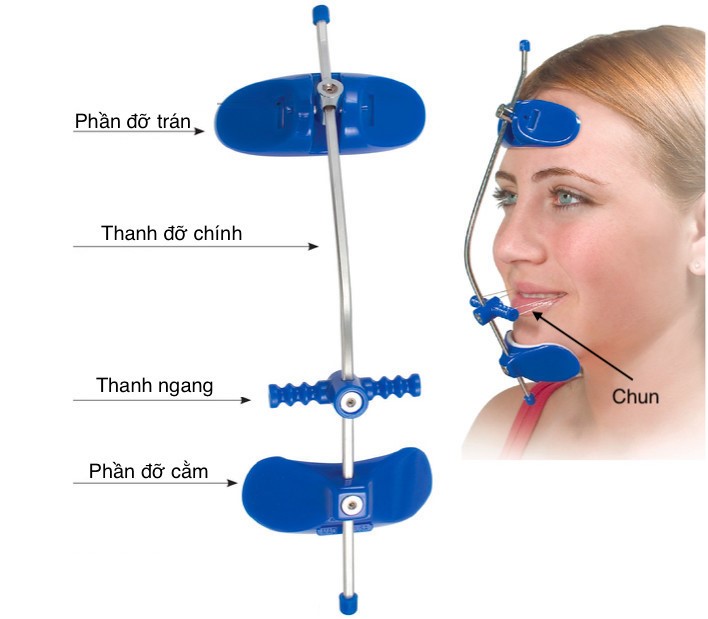
An orthodontic facemask is a growth modification appliance used to treat certain cases of underbite in young children, especially when the cause is related to underdevelopment of the upper jaw. Unlike conventional braces, this appliance has a component positioned outside the face, including a metal frame, a forehead pad, a chin cup, and elastic bands connected to a fixed appliance inside the mouth.
Many parents feel surprised and concerned when they first see this appliance: can an appliance worn outside the face really affect a child’s jawbone development? In reality, an orthodontic facemask is not only used to move the teeth into a better position, but also to help guide the growth direction of the upper jaw while the child is still developing.
An orthodontic facemask should only be indicated after the child has undergone a full examination and growth analysis. For children with a concave facial profile, underdeveloped midface, anterior crossbite, or an upper jaw that is positioned too far back compared with the lower jaw, early examination can help the dentist determine whether the child is suitable for growth modification treatment.
How Does an Orthodontic Facemask Work?
An orthodontic facemask works by creating a gentle and continuous forward-pulling force, usually in a forward and downward direction, to help stimulate the development of the upper jaw. The external appliance is connected to the fixed appliance inside the mouth through orthodontic elastics.
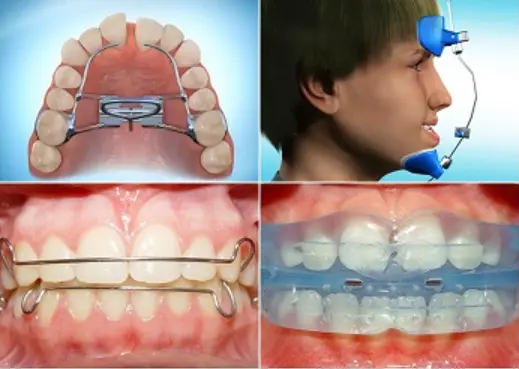
In many cases, the dentist may combine this appliance with a rapid palatal expander, also known as an RPE. The expander helps widen the upper dental arch, supports the release of the palatal sutures, and creates more favorable conditions for the upper jaw to respond to the pulling force.
An orthodontic facemask is usually monitored closely during use so the dentist can adjust the pulling force appropriately. It is important to understand that this appliance does not simply “pull the teeth.” The main goal is to influence the growth direction of the upper jaw while the child is still in the growth stage. Therefore, an orthodontic facemask is considered part of growth modification orthodontics, not just a method for straightening teeth.
In Which Cases Might a Child with Underbite Need a Facemask?
Not every child who shows signs of an underbite needs to wear a facemask. Some children have an underbite because the lower front teeth tilt forward, some because of functional habits, some because the lower jaw grows too strongly, and others because the upper jaw is underdeveloped.
An orthodontic facemask is often considered in cases where the child shows signs of underdeveloped upper jaw growth, an underdeveloped midface, low cheekbone support, a lower jaw that tends to come forward, anterior crossbite, posterior crossbite, or a concave facial profile when viewed from the side.
These conditions do not only affect facial aesthetics but may also influence chewing function, speech, bite development, psychology, and the child’s confidence. Therefore, early detection and treatment at the right time are very important.
Why Should Parents Not Wait Until the Child Is Older to Start Braces?
Many parents think that if a child has an underbite, they can simply wait until the child is older and start braces later. However, in cases of skeletal underbite, especially when the upper jaw is underdeveloped, waiting until adulthood may cause the child to miss the golden period for growth modification.
When children are still young, the jawbones are still developing, and the facial sutures may respond better to treatment forces. As children grow older, the jawbones gradually become more stable, and the effectiveness of growth appliances decreases significantly.
For this reason, an orthodontic facemask can be highly meaningful in reducing the severity of skeletal discrepancy as the child grows. In some cases, early intervention may help reduce the risk of more complex treatment later, including the possibility of orthognathic jaw surgery in adulthood.
What Is the Right Time for Facemask Treatment?
Treatment timing is a very important factor. An orthodontic facemask usually works better when the child is still in the growth stage, especially during the mixed dentition phase and when the jawbone can still respond to orthopedic treatment.
In many cases, children should have an early orthodontic examination at around 6–8 years old so the dentist can check the bite, dental arches, jaw relationship, and facial growth direction. This does not mean every child needs immediate treatment, but it helps parents understand which conditions should be monitored and which ones may require early intervention.
For jaw growth abnormalities such as underbite caused by an underdeveloped upper jaw, treatment timing can greatly affect the result. If the favorable growth period is missed, the treatment plan later may become more complicated.
What Needs to Be Evaluated Before Indicating a Facemask?
Before indicating an orthodontic facemask, the dentist needs to perform a careful examination and diagnosis. “Pulling forward just because a child looks underbite” is not the correct treatment principle in modern orthodontics.
The child needs a clinical examination, bite analysis, skeletal relationship evaluation, lateral cephalometric X-ray, assessment of facial growth direction, and consideration of functional factors such as the airway, oral habits, tongue position, and the balance of the lips, cheeks, and tongue muscles.
An accurate diagnosis helps the dentist determine whether the child’s underbite is caused by the teeth, the upper jaw, the lower jaw, or a combination of multiple factors. From there, the treatment plan can be personalized and made suitable for each child.
How Long Does a Child Need to Wear a Facemask Each Day?
An orthodontic facemask requires very good cooperation from both the child and the family. With facemask treatment, daily wearing time plays a major role in the final outcome. Depending on the treatment plan, the dentist may instruct the child to wear the appliance for about 10–14 hours per day, mainly in the evening and while sleeping.
During the initial stage, the child may feel slightly uncomfortable, experience mild pressure around the chin or forehead, or feel shy about wearing an appliance outside the face. However, most children gradually adapt when they receive encouragement from their parents and proper guidance from the dentist.
Consistency in wearing the appliance greatly affects treatment effectiveness. If the child does not wear it for enough hours, the pulling force cannot be maintained steadily, and the growth modification result may not meet expectations.
What Changes Can a Facemask Create?
When properly indicated and when the child cooperates well, an orthodontic facemask can help improve the jaw relationship, reduce the severity of skeletal underbite, support correction of anterior crossbite, and help the midface develop more harmoniously.
In many cases, parents may notice changes not only in the teeth but also in the child’s face. The upper lip may look fuller, the midface may become more defined, the facial profile may appear more harmonious, and the smile may become more balanced.
However, it is important to understand that this appliance is not a “miracle solution” that can completely change genetic factors. The effectiveness of an orthodontic facemask is not the same for every child. The result depends on the cause of the underbite, the severity of skeletal discrepancy, age, growth direction, and the child’s level of cooperation.
Is Braces Treatment Still Needed After Facemask Treatment?
After the growth modification phase, many children still need a second phase of orthodontic treatment with braces or clear aligners when more permanent teeth have erupted. The goal of this phase is to align the teeth more precisely, complete the bite, optimize chewing function, and improve smile aesthetics.
An orthodontic facemask helps create a more favorable jawbone foundation, but it does not completely replace the later tooth alignment phase in every case. Parents should understand that this is part of a long-term treatment plan, especially for children with jaw growth abnormalities.
When intervention is carried out at the right time, the growth modification phase can help reduce the complexity of future treatment and create better conditions for completing the smile as the child grows older.
What Should Parents Keep in Mind When Their Child Is Treated with a Facemask?
Parents play a very important role throughout the treatment process. Young children often need reminders to wear the appliance on schedule, keep the appliance clean, change the elastics as instructed, and attend follow-up appointments on time.
If the child experiences significant pain, the appliance causes strong irritation, the forehead or chin area becomes irritated, the elastics become loose, the intraoral appliance comes loose, or the child cannot wear the appliance properly, parents should contact the dentist for an early check-up.
An orthodontic facemask is only effective when there is cooperation between the dentist, the child, and the family. Gentle explanation, encouragement, and close monitoring during the initial stage will help the child adapt better.
Conclusion: A Facemask Can Help Change the Direction of Facial Growth When Used at the Right Time
An orthodontic facemask is a growth modification appliance that plays an important role in treating certain cases of skeletal underbite in children caused by underdeveloped upper jaw growth. This appliance does not only affect the teeth but also aims to support upper jaw development while the child is still growing.
The most important thing is not to wait until the teeth become severely misaligned before starting braces, but to detect early how the jawbones are developing. For children with signs of underbite, anterior crossbite, a concave facial profile, or an underdeveloped midface, an early orthodontic examination can help the dentist create an appropriate monitoring and intervention plan.
An orthodontic facemask is not the right choice for every case. However, for children who are properly indicated, treated at the right time, and cooperate well, this appliance can help improve the bite, support more balanced facial development, and reduce the risk of more complex treatment in adulthood.
If parents are wondering whether a child with an underbite needs early intervention, they should take the child for an examination so the dentist can evaluate the jawbone, bite, and growth stage. Sometimes, what changes a child’s future facial development is not a complex treatment in adulthood, but a well-timed growth modification intervention started early.
Contact: https://drngotuananh.vn/contact
