
Stainless Steel Crowns for Baby Teeth: Answering Common Questions from Parents
When a child has severe decay in a baby tooth, a large broken tooth, or a filling that frequently falls out, many parents wonder whether the tooth should be extracted, refilled, or restored with a stainless steel crown. This is a commonly used restorative method in pediatric dentistry, helping protect the remaining tooth structure and maintain the baby tooth until it naturally falls out.
So what are the advantages of this method, how is the procedure performed, and how should children be cared for after treatment? The answers below will help parents better understand before taking their child to the dental clinic for an examination.

-
When a Baby Tooth Has Severe Decay, Why Should It Not Be Extracted Too Early?
Many parents think that baby teeth do not need treatment because they will eventually fall out. However, baby teeth play an important role in a child’s dental development, jaw growth, chewing function, and speech development.
Baby teeth help maintain space for permanent teeth, support normal chewing, contribute to balanced dental arch development, and guide permanent teeth to erupt in the correct position and order.
When a baby tooth is extracted too early, the adjacent teeth may shift into the empty space. This can reduce the space needed for the permanent tooth to erupt properly. As a result, the child may have a higher risk of crooked teeth, crowding, or the need for orthodontic treatment later.
If the tooth can still be preserved, the dentist may recommend stainless steel crowns for baby teeth to restore the tooth’s shape, improve chewing function, and protect it from further damage.
Why Do Fillings in Baby Teeth Often Fall Out?
For baby teeth with severe decay or large fractures, the remaining tooth structure may be too weak to support a filling for a long time. Under daily chewing pressure, the filling may crack, loosen, or fall out after a period of use.
In these cases, stainless steel crowns for baby teeth may provide better stability than large fillings because they cover the entire remaining tooth structure. This helps distribute chewing force more evenly and reduces the risk of restoration failure.
Some benefits of stainless steel crowns for baby teeth include:
Covering and protecting the remaining tooth structure.
Providing good resistance to chewing force.
Reducing the risk of fillings loosening or falling out.
Lowering the risk of recurrent tooth decay in the treated area.
Helping maintain the baby tooth until it naturally falls out.
Thanks to their durability and full coverage, stainless steel crowns for baby teeth are often considered for severely decayed teeth, teeth with large fractures, or teeth that have undergone pulp treatment.
Which Cases May Need a Crown?
The dentist may consider placing a crown in several cases, such as baby teeth with decay on multiple surfaces, teeth that have lost a large amount of structure, teeth after pulp treatment, teeth at risk of cracking during chewing, or old fillings that frequently loosen or fall out.
Whether a child is suitable for stainless steel crowns for baby teeth should be determined after a direct dental examination. The dentist will assess the extent of damage, the remaining tooth structure, the child’s bite, and the expected time before the baby tooth naturally falls out.
Is the Procedure for Placing a Stainless Steel Crown on a Baby Tooth Complicated?
The procedure is usually relatively quick. Treatment time depends on the condition of the tooth, the child’s level of cooperation, and whether pulp treatment is needed before crown placement.
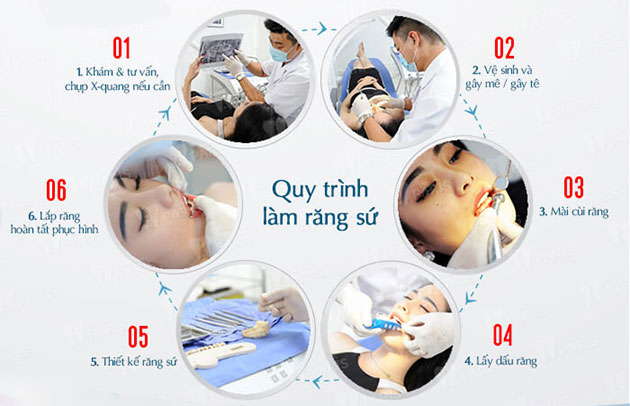
Step 1: Dental Examination and Assessment
The dentist examines the extent of decay, checks the remaining tooth structure, and may request an X-ray if necessary. After that, the dentist determines whether stainless steel crowns for baby teeth are a suitable treatment option.
Step 2: Cleaning and Tooth Preparation
The decayed tooth structure is removed. The dentist then adjusts the shape of the tooth to create enough space for the crown to fit properly.
Step 3: Selecting the Crown Size
Stainless steel crowns are prefabricated in different sizes for each baby tooth position. The dentist selects and adjusts the crown so that it fits closely around the tooth, does not feel too bulky, and does not affect the child’s bite.
Step 4: Cementing the Crown
After checking the fit, the dentist uses specialized dental cement to secure the crown onto the baby tooth.
During treatment, the dentist will choose an appropriate pain control or anesthesia method based on each child’s condition. Each child’s experience may be different depending on the level of tooth damage and their ability to cooperate during treatment.
-
Will Children Feel Uncomfortable After Crown Placement?
In the first few days after placement, children may feel that the crown is slightly bulky, unfamiliar in the mouth, or mildly sensitive when chewing. This is quite common and usually improves gradually as the child gets used to the crown.
If the child experiences prolonged pain, the crown feels loose, the gums become swollen or red, or the child cannot chew normally, parents should contact the dental clinic for a proper examination. Parents should not try to remove or adjust the crown at home.
What Should Parents Keep in Mind After Stainless Steel Crowns for Baby Teeth Are Placed?
After stainless steel crowns for baby teeth are placed, proper care is important to help the crowns function well and protect the treated teeth. Parents should follow the dentist’s instructions carefully during the first few days after treatment.
Parents should give the child soft foods at first, limit foods that are too hard, sticky, or chewy, and remind the child to brush carefully twice a day. The gumline around the crown should also be cleaned thoroughly to reduce plaque buildup and gum irritation.
Regular follow-up appointments are also important. During these visits, the dentist can check whether the stainless steel crowns for baby teeth are stable, whether the gums are healthy, and whether the treated teeth are developing normally.
Although stainless steel crowns for baby teeth cover and protect the damaged tooth structure, children still need good daily oral hygiene. This helps reduce the risk of gum inflammation, tooth decay in other teeth, and other oral health problems.
Will the Crown Fall Out Naturally When the Child Changes Teeth?
In most cases, stainless steel crowns for baby teeth will fall out together with the baby teeth when the roots naturally resorb and make space for the permanent teeth to erupt. However, the timing of tooth replacement may vary from child to child.
Parents should take their child for regular dental check-ups so the dentist can monitor the tooth replacement process, check the condition of the crowns, and detect any abnormal signs early.
Conclusion
Stainless steel crowns for baby teeth are a durable restorative option for many cases of severely decayed baby teeth, large tooth fractures, teeth after pulp treatment, or teeth with fillings that often fall out. This method helps preserve baby teeth, maintain chewing function, and keep space for permanent teeth.
However, stainless steel crowns for baby teeth are not suitable for every case in the same way. Children should be examined by a dentist so their tooth condition can be properly assessed and the most appropriate treatment can be recommended. When parents notice severe decay or a filling that frequently falls out, they should take the child to the dental clinic early to prevent further damage.
Contact: https://drngotuananh.vn/contacthttps://drngotuananh.vn/contact