
Temporomandibular Joint Pain Require Braces? Treatment Options
Temporomandibular joint pain often makes people think they need braces. However, pain in front of the ear, muscle fatigue, or difficulty opening the mouth does not necessarily mean orthodontic treatment is required. Treatment depends on the underlying cause. Early assessment helps distinguish chewing muscle problems from other conditions requiring care.
1. What Is Temporomandibular Joint Pain?
The temporomandibular joint (TMJ) connects the lower jaw to the skull, allowing us to chew, speak, and open our mouths. When the chewing muscles or joint structures are affected, symptoms of temporomandibular disorders (TMD) may develop.
Common symptoms include:
-
Pain in front of the ear, especially when chewing or yawning.
-
Jaw fatigue or muscle tension, particularly upon waking.
-
Limited mouth opening, jaw deviation, or locking.
-
Clicking or popping sounds during jaw movements.
Joint sounds without pain do not always require treatment. However, if temporomandibular joint pain persists or affects eating, a professional examination is recommended.
2. Causes of Temporomandibular Joint Pain
This condition may be associated with chewing muscle tension, teeth grinding or clenching, disc disorders, injuries, or joint conditions. Stress may also contribute to increased jaw clenching and discomfort.
Misaligned teeth or an improper bite do not automatically cause TMD. Therefore, examining tooth alignment alone is insufficient to determine whether braces are necessary.
3. Does Temporomandibular Joint Pain Require Braces?
Not everyone needs braces. Orthodontic treatment helps align teeth and correct bite relationships when clinically indicated, but it is not considered a routine treatment for TMD.
If a patient also has crowded teeth, a crossbite, or another malocclusion requiring correction, the dentist may consider orthodontic treatment after evaluating the jaw muscles and joints.
The goal is to improve tooth alignment and bite relationships, not to guarantee a cure for temporomandibular joint pain.
4. Conservative Treatment for Temporomandibular Joint Pain
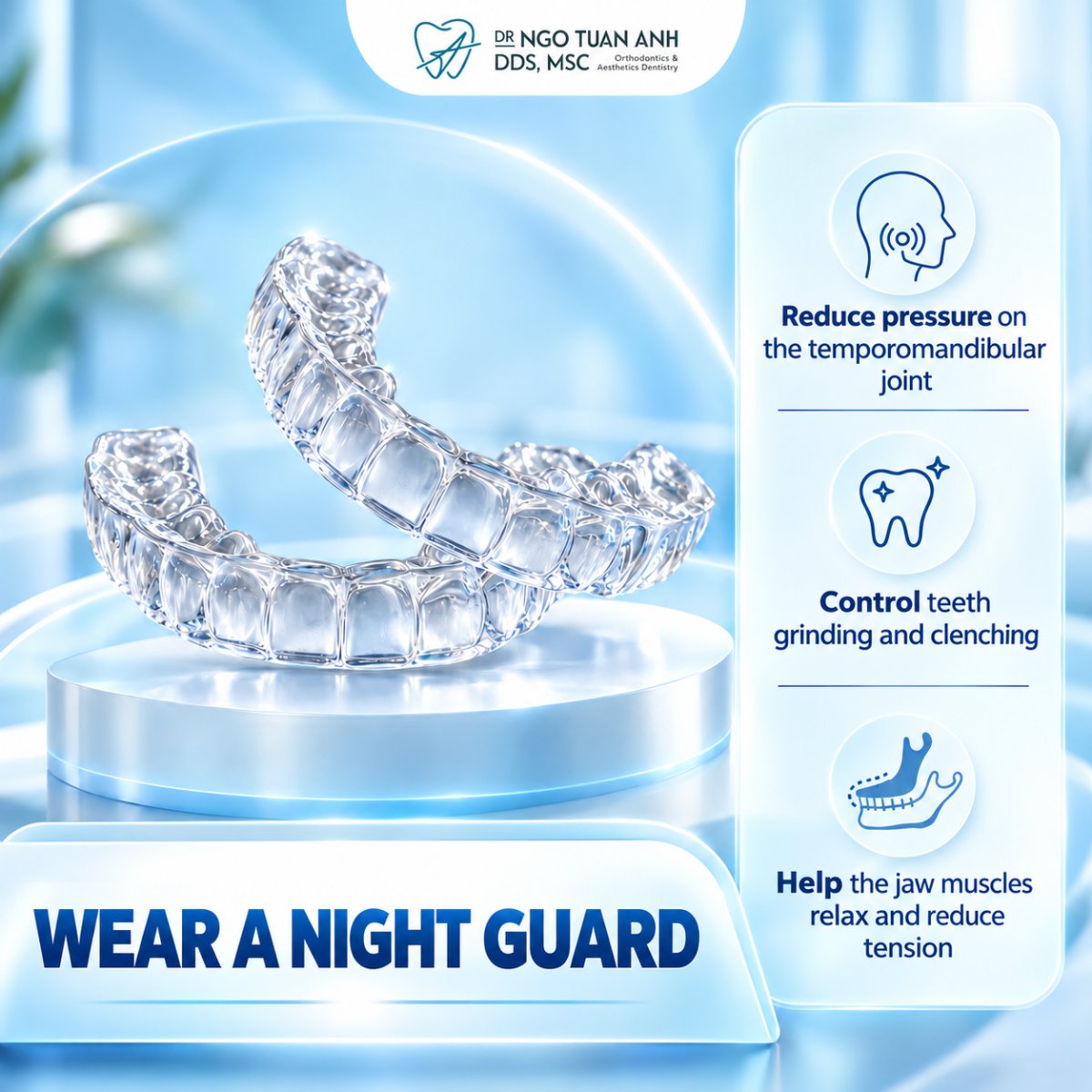
4.1 Custom-made occlusal splints: These may be prescribed to protect teeth from grinding or clenching. Pain relief varies between patients, and professional fitting and monitoring are necessary.
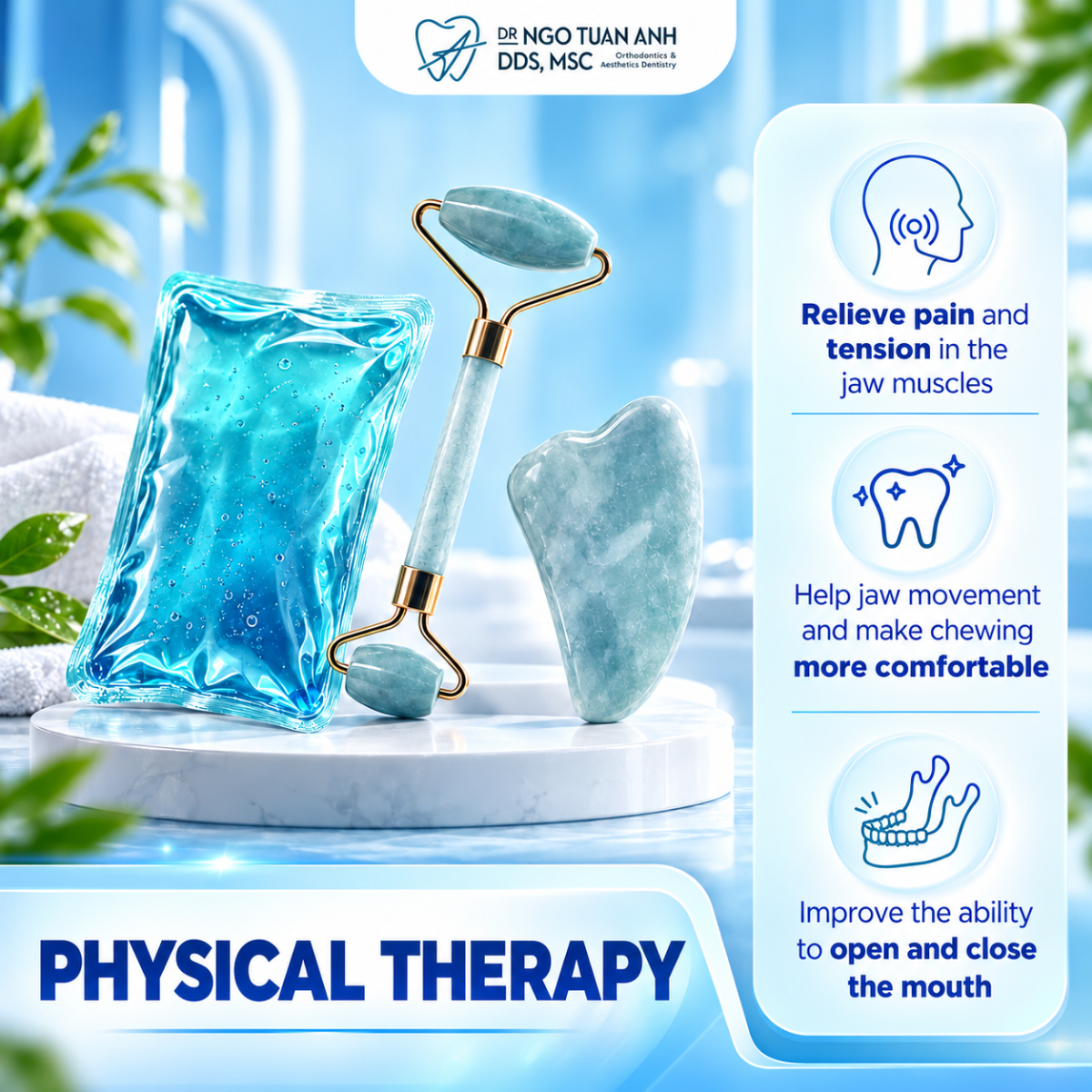
4.2 Physical therapy: Guided jaw exercises, muscle relaxation, massage, and warm or cold compresses may help relieve discomfort and improve jaw function.
4.3 Lifestyle adjustments: During painful episodes, choose soft foods and avoid hard or chewy foods, chewing gum, excessive mouth opening, and resting your chin on your hand. Try to reduce jaw clenching when resting.
4.4 Medication when necessary: A dentist or physician may prescribe appropriate pain relievers or anti-inflammatory medication. Avoid prolonged use without professional guidance.

5. How GAMMA CADIAX Supports Jaw Joint Assessment
At DDS, MSc Ngo Tuan Anh Dental Clinic, GAMMA CADIAX condylography may be used when indicated to record the movement pathways of the mandibular condyles.
The data provide additional information about jaw movements, complementing the patient's medical history and clinical examination of the muscles and joints.
This technology is a supplementary assessment tool. It cannot independently determine the cause of temporomandibular joint pain or replace a clinical examination.
6. When Should You See a Dentist?
You should seek professional evaluation if you experience recurring pain in front of the ear, difficulty opening your mouth, persistent jaw fatigue, or discomfort while chewing.
If you have suffered an injury, experience significant swelling, develop a fever, or cannot open or close your mouth normally, prompt medical assessment is necessary.
Temporomandibular joint pain does not automatically mean you need braces. A proper examination helps determine whether conservative care or a combination of treatments is appropriate, avoiding unnecessary interventions.
Book an appointment at DDS, MSc Ngo Tuan Anh Dental Clinic for a comprehensive assessment and personalized consultation.
Address: 209 Bis Nguyen Van Thu Street, Tan Dinh Ward, Ho Chi Minh City.
Hotline: 076 757 3794 – 088 690 2209.