
Sensitive Teeth ? Causes, Symptoms, and Effective Ways to Improve Them
Sensitive teeth are a common dental problem that often occurs when the teeth come into contact with cold, hot, sweet, or acidic foods and drinks, or when cold air passes through the mouth. The sensation usually appears suddenly, feels sharp for a short time, and then gradually fades. Although this condition is not always dangerous, it should not be ignored if it happens frequently, as it may indicate enamel wear, gum recession, exposed dentin, or other dental problems.
Many people think that sensitive teeth are only a temporary discomfort. In reality, this condition can affect eating, drinking, oral hygiene, and overall quality of life. When patients avoid cold drinks, acidic fruits, or proper brushing because of discomfort, plaque can build up more easily, increasing the risk of tooth decay, gum inflammation, and bad breath.
What Are Sensitive Teeth?
Sensitive teeth refer to a condition in which the teeth feel sharp, painful, or uncomfortable when exposed to external stimuli. Common triggers include very hot foods, cold drinks, sweets, acidic foods, toothbrushing, or flossing.
In healthy teeth, the outer enamel layer protects the dentin underneath. The roots are also protected by the gums. When enamel becomes worn, gums recede, or the tooth root becomes exposed, the tiny dentinal tubules inside the tooth may come into contact with the oral environment. As a result, hot, cold, sweet, or acidic stimuli can reach the nerves inside the tooth and cause discomfort.
Common Symptoms of Tooth Sensitivity
The most typical sign of sensitive teeth is sudden pain when the teeth come into contact with cold food or drinks. Some people may also feel discomfort when drinking hot beverages, eating sweets, consuming sour fruits, or breathing in cold air through the mouth.
Depending on the cause, sensitive teeth may affect one tooth, several teeth, or the entire mouth. The pain is usually short-lived but may occur repeatedly throughout the day. If the pain lasts for a long time, appears spontaneously, occurs at night, or is accompanied by gum swelling, patients should visit a dentist early because the problem may be more than ordinary tooth sensitivity.
Causes of Sensitive Teeth
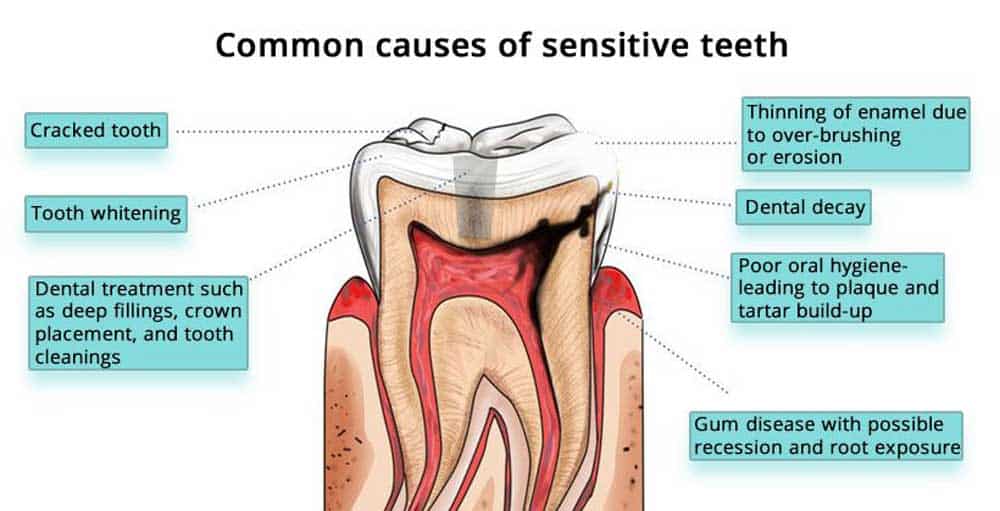
There are many reasons why teeth become sensitive. One common cause is brushing too hard or using a hard-bristled toothbrush. This habit can wear down enamel, cause gum recession, and expose dentin.
Gum recession is also an important factor that can lead to sensitive teeth. When the gums no longer cover the tooth roots properly, the dentin near the root area becomes more exposed to food, drinks, and air. This condition is often seen in people with periodontal disease, improper oral hygiene habits, or long-term aggressive brushing.
Tooth decay, cracked teeth, or leaking fillings can also cause sensitivity. When the tooth structure is damaged, bacteria and external stimuli may penetrate deeper into the tooth, increasing the risk of pulp inflammation or prolonged pain.
In addition, teeth grinding or clenching at night can wear down enamel and make the teeth more vulnerable. People who frequently consume acidic foods and drinks, such as carbonated beverages, lemon, orange, vinegar, or sports drinks, may also experience enamel erosion over time.
Why Does Exposed Dentin Cause Pain?
Dentin is the layer located beneath the enamel and contains many tiny tubules that lead toward the dental pulp. When dentin is protected by enamel and gums, external stimuli have difficulty reaching the nerves. However, when this protective layer is lost, the exposed dentinal tubules allow hot, cold, sweet, or acidic stimuli to travel inward and cause sensitive teeth.
This is why people with enamel erosion, gum recession, or cracked teeth often notice sensitivity more clearly when eating or drinking. If the underlying cause is not properly examined and treated, the condition may continue and affect daily life.

Habits That Can Make Teeth More Sensitive
Some common habits can make sensitive teeth worse. Brushing immediately after eating acidic foods is one example. At that time, enamel may be temporarily softened by acid. If you brush too hard right away, enamel may wear down even more. It is better to rinse your mouth with clean water first and wait for a while before brushing.
Using acidic mouthwash for a long time may also increase sensitivity, especially when dentin is already exposed. People with sensitive teeth should ask their dentist about a suitable mouthwash and may be advised to use fluoride-containing products when appropriate.
Habits such as teeth grinding, biting pens, biting nails, or chewing ice can also cause tooth wear, cracks, or structural damage. When the tooth structure becomes weakened, the risk of sensitivity increases.
Is Sensitivity After Dental Treatment Normal?
Some dental procedures, such as scaling, root surface treatment, replacing old crowns, fillings, or restorations, can cause temporary tooth sensitivity. In many cases, this feeling gradually decreases after a few weeks as the teeth and gums stabilize.
However, if sensitive teeth persist, become worse, or cause sharp pain when chewing, patients should return to the dental clinic for an examination. The dentist will check whether the cause is related to gum recession, tooth decay, cracked teeth, pulp inflammation, or an improper bite after restoration.
How to Improve Tooth Sensitivity at Home
To improve sensitive teeth, patients should start by changing their oral hygiene habits. Use a soft-bristled toothbrush, brush gently with the correct technique, and avoid scrubbing horizontally with too much force. Toothpaste designed for sensitive teeth may help reduce discomfort when used consistently as directed.
People with sensitive teeth should limit highly acidic foods, carbonated drinks, and extremely cold or hot foods if these trigger pain. After consuming acidic foods or drinks, rinse the mouth with clean water to reduce the effect of acid on enamel.
Regular dental check-ups are also important so that dentists can detect tooth decay, gum recession, enamel wear, or periodontal problems early. Home care is only suitable for mild cases. If the cause is tooth decay, a cracked tooth, or pulp inflammation, professional dental treatment is necessary.
When Should You See a Dentist?
You should see a dentist if sensitive teeth last for several days, occur in one fixed area, cause pain when chewing, appear spontaneously, or come with gum swelling, bleeding gums, or bad breath. These signs may be related to tooth decay, gingivitis, periodontal disease, cracked teeth, or pulp damage.
The dentist can examine the enamel, gums, bite, and old restorations to determine the cause. Depending on each case, treatment may include oral hygiene guidance, desensitizing products, fluoride application, dental fillings, periodontal treatment, or root canal treatment if needed.
How to Prevent Tooth Sensitivity
Preventing sensitive teeth starts with protecting the enamel and gums. Brush gently, use a soft-bristled toothbrush, replace your toothbrush regularly, and combine brushing with flossing to clean between the teeth. You should not brush too hard because effective cleaning depends on proper technique and enough brushing time, not excessive force.
You should also limit highly acidic foods, avoid chewing ice, avoid using your teeth to bite hard objects, and manage teeth grinding if present. If you grind your teeth during sleep, the dentist may recommend a night guard to reduce excessive pressure on the teeth.
Regular dental check-ups are another important way to detect the risks of sensitive teeth early. When problems such as gum recession, tooth decay, enamel wear, or cracked teeth are managed early, the condition can be controlled more effectively.
Conclusion
Sensitive teeth are common but should not be taken lightly, especially when discomfort occurs frequently or lasts for a long time. The causes may include enamel wear, gum recession, tooth decay, cracked teeth, teeth grinding, acidic foods, or sensitivity after certain dental treatments.
Understanding the cause helps patients choose the right care method and avoid making the condition worse. If sensitive teeth affect eating, oral hygiene, or daily activities, you should visit a dental clinic so that the dentist can examine your condition and recommend a safe treatment plan.
Reference: Live Science – Sensitive teeth.
Contact: https://drngotuananh.vn/lien-he
